The moment I realized my camera wasn’t the important part...
...I didn’t even have it in my hands.
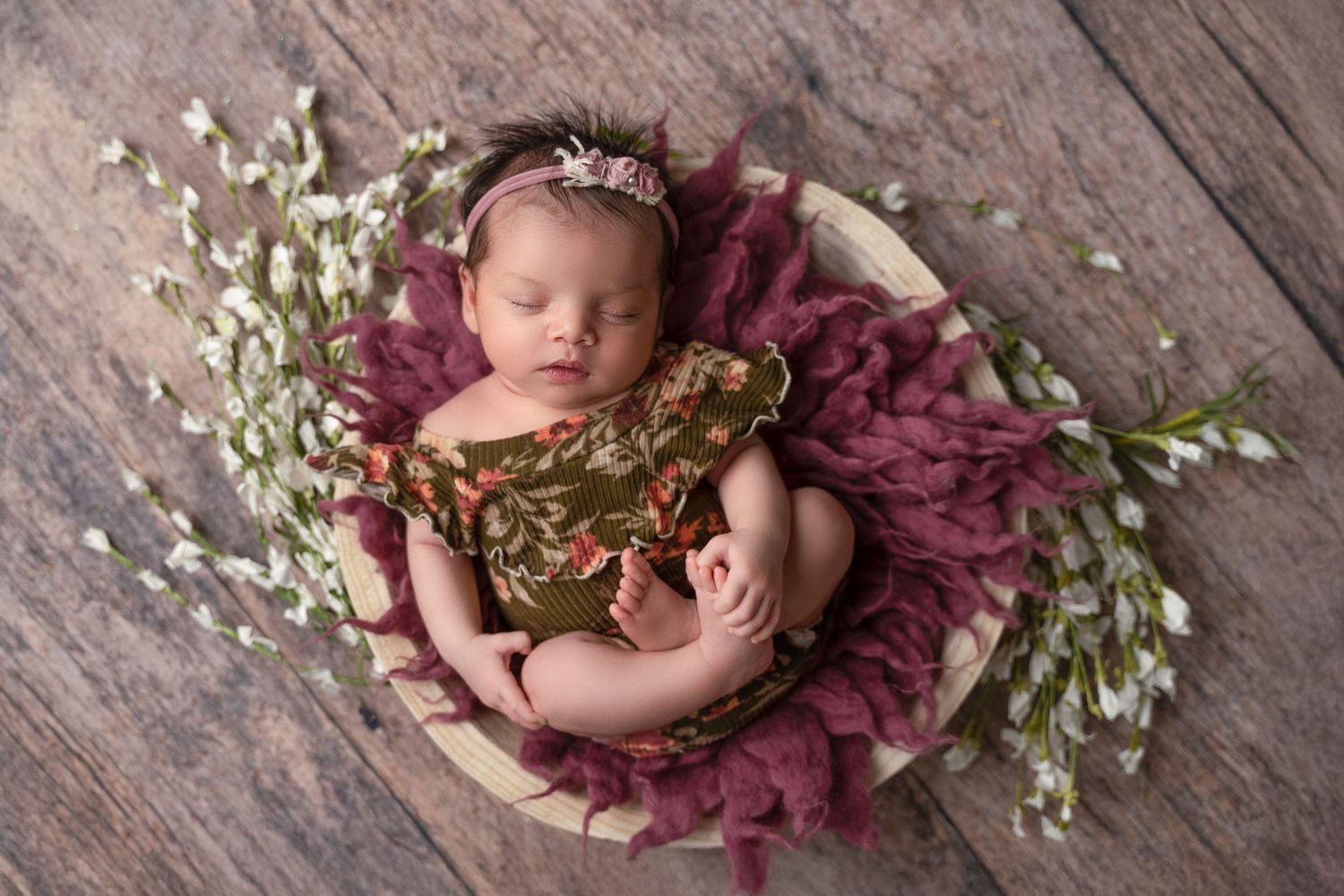
It was sitting on the floor behind me, lens cap on, battery charged, ready for the job it thought it was there to do. I was kneeling on the rug in my studio, holding a newborn who had decided the world was deeply suspicious and sleep was a personal attack. The parents were hovering in that specific way new parents do, alert and apologetic, bracing for disappointment.
And there I was, rocking a baby, not taking a single photo.
That’s when it clicked. Not the shutter. The truth.
Before photography became my business, it was my control mechanism. After three kids, multiple moves from Massachusetts to Virginia and then Georgia, and a life that rarely stayed where I set it, my camera felt like something I could master. I learned the rules. I practiced. I upgraded. I believed that if I knew enough, I could guarantee the outcome.
Motherhood cured me of that illusion early, but habits die hard.
When I first started photographing families, I thought my job was to capture the moment. Freeze it. Frame it. Make it beautiful. I focused on angles and light and timing like they were the whole story.
They weren’t.
The turning point didn’t come during a big, emotional session. It came during a quiet one. A newborn session with a baby who would not, under any circumstances, do what the internet suggested newborns should do. No sleepy poses. No compliant curling. Just a tiny human who wanted to be held and heard.
So I stopped trying to make the moment behave.
I talked to the parents. I asked about the pregnancy. I listened to their story. I rocked their baby until his breathing changed and the room softened. The tension eased. And somewhere in that space, trust settled in.
When I finally picked up the camera, the images were there waiting. Not because I forced them, but because the moment had been built.
That experience cracked something open for me.
I started noticing how often the best images came from the parts of the session that had nothing to do with photography. The way a mother’s shoulders drop when she realizes she doesn’t have to perform. The way a dad relaxes when he feels included instead of instructed. The way a child opens up when they’re seen as a person, not a subject.
Connection does the heavy lifting. The camera just documents it.
This realization mirrored something happening in my personal life too.
As I navigate divorce, I’ve become acutely aware of how much we mistake tools for solutions. We think the right words will fix things. The right plan. The right approach. We forget that trust, once fractured, can’t be forced back into place. It has to be rebuilt slowly, through consistency and presence.
I see the same thing with my kids.
Thomas doesn’t need lectures. He needs me to sit on the floor and listen. Carter doesn’t respond to pressure. She opens up when she feels understood. Mackenzie can spot inauthenticity from a mile away. If I’m not grounded, they know.
None of that can be fixed with better tools.
Photography taught me that. Or maybe motherhood did, and photography just made it obvious.
There’s a misconception that photographers create moments. We don’t. We create conditions.
We create space for people to show up as themselves. We create environments where it’s safe to soften. Where vulnerability isn’t rushed or rewarded, just allowed.
I’ve photographed babies who needed movement instead of stillness. Seniors who needed humor before confidence. Mothers who needed reassurance before they could relax into the frame. Every time I slowed down and met them where they were, the images followed.
When I rush, it shows. When I listen, it shows more.
The camera doesn’t know when someone feels safe. It doesn’t register trust or tension or relief. It just records what’s there. If what’s there is guarded or stiff or overwhelmed, that’s what you’ll see. If what’s there is connection, the image breathes.
This shift changed how I approach my work, but it also changed how I approach myself.
I spent years trying to perfect things instead of understand them. I thought competence was the goal. Now I know presence matters more.
Some of my favorite images aren’t technically flawless. Hair out of place. Hands mid-motion. Eyes not perfectly aligned with the lens. What they have is honesty. A sense of this was real.
That’s the part people respond to. That’s the part they feel in their bodies when they see the image later.
The camera is important, of course. It’s a tool. A good one. But it’s not the magic.
The magic happens when someone feels safe enough to exhale.
I think about that moment often, kneeling on the rug with a baby in my arms and my camera behind me. I wasn’t behind the lens. I was in the moment. And that made all the difference.
The best images are created long before the shutter clicks. They’re built in conversation, in patience, in the quiet decision to slow down and see the person in front of you.
Everything else is just mechanics.
And mechanics have never been the point.