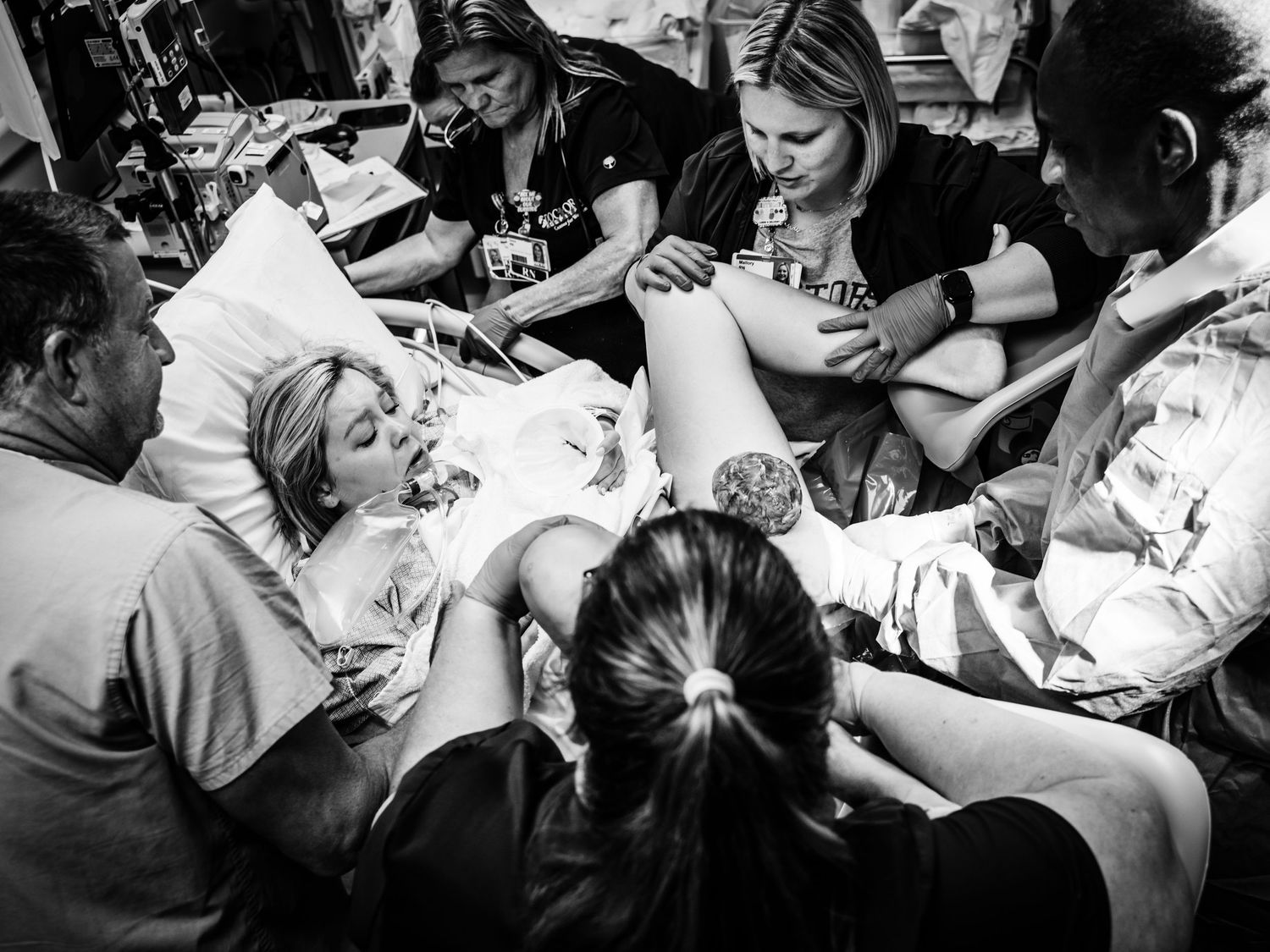
No one warned me about the quiet.
Not the peaceful kind. Not the soft, sacred hush people like to romanticize. I mean the kind of quiet that lands after everyone leaves, after the casseroles stop coming, after the texts slow down, after you realize the baby is asleep and you’re wide awake with a brain that refuses to shut off.
They warned me about sleep deprivation. Everyone does. That part is almost a rite of passage. You brace for it. You expect to be tired. You joke about it. You drink the coffee.
What no one really prepares you for is everything else that arrives quietly, unannounced, and stays longer than expected.
After Thomas was born, I remember sitting on the edge of the bed at 3 a.m., holding him while the house hummed in that strange nighttime way. I wasn’t panicked. I wasn’t overwhelmed in the way I’d been told to expect. I was… untethered. Like I had stepped into a life that looked familiar but felt fundamentally different, and no one had handed me a map.
The baby was here. And somehow, so was a new version of me. One I hadn’t met yet.
No one warns you that your identity doesn’t shift all at once. It splinters. Slowly. In small, almost polite ways. You still recognize yourself, but not entirely. Your priorities rearrange themselves without asking. The things that once mattered feel oddly distant. \
The things that didn’t matter suddenly feel enormous.
With Carter, I felt this even more sharply. I loved her instantly, fiercely. And still, there were moments I missed my old life so much it took my breath away. I missed spontaneity. I missed silence that didn’t feel loaded. I missed being able to finish a thought without interruption.
No one tells you that missing your old life doesn’t mean you love your new one any less.
They also don’t tell you how relationships shift in ways you can’t control. Your partner becomes a teammate overnight, and sometimes teammates don’t communicate well under pressure. You’re both exhausted, both trying, both convinced the other one is doing it wrong at least once a day.
You stop being lovers for a while and become logistics managers. Who fed the baby last. Who gets up next. Who forgot to restock diapers. It’s not romantic. It’s not even personal. But it can feel deeply personal when you’re running on fumes.
By the time Mackenzie arrived, I was more prepared for the practical parts. I knew the rhythms. I knew the drills. What I wasn’t prepared for was the emotional whiplash.
One minute you’re staring at your baby in awe. The next, you’re crying because the sink is full of bottles and you can’t remember the last time you felt like yourself. The swings are fast and unforgiving. There is very little middle ground in those early weeks.
No one warns you that joy and grief can coexist so loudly.
They don’t tell you about the quiet moments that don’t photograph well. The ones no one posts. The ones where you’re sitting on the couch with spit-up on your shirt, watching a show you don’t care about, feeling oddly empty and impossibly full at the same time.
Those moments are real. They count. They just don’t come with captions.
As a photographer, I see this play out constantly. Parents come in apologizing for how they look, how they feel, how they remember things. They say they don’t feel magical enough. That they’re too tired to enjoy it properly. That they’re afraid they’re doing it wrong.
I want to tell them what I learned the hard way. There is no proper way to feel after a baby is born.
There is only honesty.
Motherhood cracked me open in ways I didn’t expect, but it didn’t stop there. Entrepreneurship did the same thing. So did divorce.
What no one warns you about after a baby is born is how many versions of yourself you will become in the years that follow. How often you’ll have to grieve the old ones while learning to love the new.
After my marriage ended, I recognized that same quiet again. That same late-night kitchen stillness. Different circumstances, same sensation. Life rearranging itself without asking for permission.
And here’s what I know now that I didn’t then. You don’t need to have it figured out right away. You’re not supposed to bounce back. You’re supposed to recalibrate.
Recalibration looks like contradiction. Strength and softness sharing space. Confidence one minute, doubt the next. It looks like showing up even when you don’t feel like the version of yourself you used to be.
No one warns you that becoming a mother is not an event. It’s a process. One that continues long after the newborn stage fades. One that keeps asking you to stretch, adjust, and reintroduce yourself to yourself.
There are things I wish I could go back and tell that younger version of me. Sitting on the bed at 3 a.m., wondering why she didn’t feel the way she thought she should.
I’d tell her this. You’re not broken. You’re becoming.
I’d tell her that the quiet isn’t empty. It’s transitional. That the parts of herself she thinks she’s lost are just waiting for room to come back in a new way.
And I’d tell her that one day, she’ll look back on those foggy days with more compassion than clarity. Not because they were perfect, but because she survived them.
If you’re in that season now, in the aftermath of birth where everyone assumes you’re fine because the baby is here, know this. The quiet moments count too. The messy ones. The confusing ones. The ones where you’re not sure how you feel yet.
No one warned you. But you’re not alone.
And you’re doing better than you think.